When One Wound Is Not the Only Wound: Strategic Bleeding Control for Community Responders in Multi-Casualty Events

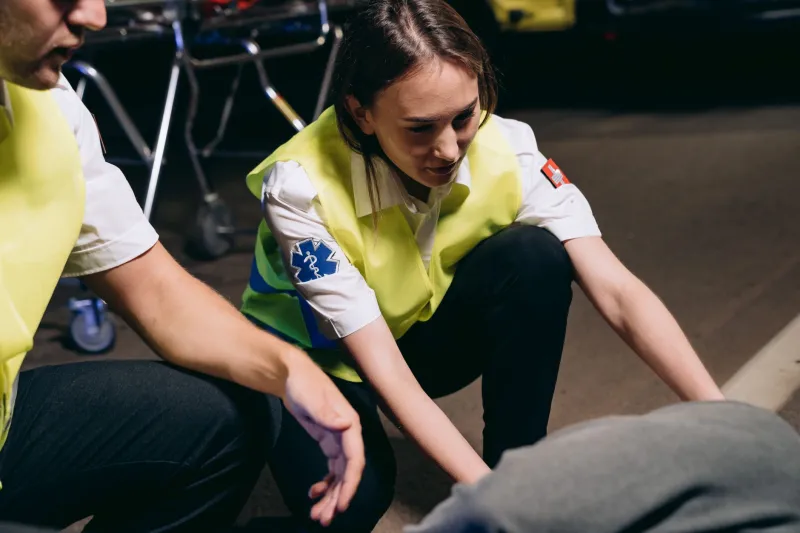
Photo by Photo by Natalia Marcelewicz on Unsplash on Unsplash
Most first aid training is built around a reassuring premise: one rescuer, one patient, one problem. You apply pressure. You call 911. You wait. That model works remarkably well in isolated emergencies—a kitchen accident, a minor car collision, a fall on the sidewalk. But when a mass casualty event unfolds in a public space, a school, a shopping center, or a community gathering, the rules change in ways that standard certification courses rarely address.
In those moments, the everyday hero who steps forward may find themselves surrounded by multiple severely injured people, limited supplies, and no clear timeline for professional assistance. Understanding how to think—not just what to do—can be the difference between saving one life and saving several.
Understanding the Scope of the Problem
The term "mass casualty incident," or MCI, often conjures images of large-scale disasters. In practice, however, an MCI can involve as few as three or four patients when the number of injured exceeds the immediate capacity of available responders. A single bystander confronting two people with life-threatening hemorrhage is, functionally, operating in a mass casualty environment.
Severe bleeding remains among the most immediately preventable causes of death in traumatic emergencies. Research drawn from military medicine—particularly lessons from combat operations in Iraq and Afghanistan—has demonstrated repeatedly that hemorrhage control in the first minutes of injury is decisive. The civilian Stop the Bleed initiative, launched nationally in 2015, reflects that understanding. Yet even dedicated Stop the Bleed training tends to focus on the individual patient. The multi-victim scenario requires an additional layer of preparation.
Triage Before Treatment: Thinking Like a System
The word "triage" comes from the French verb meaning to sort. In emergency medicine, it describes the process of categorizing patients by the urgency and survivability of their injuries so that limited resources can be directed where they will do the most good.
For an untrained bystander, the instinct is to help the first person encountered—or the person who is screaming loudest. Both impulses, while entirely human, can be counterproductive. A person who is conscious and vocalizing pain is, by definition, maintaining an airway and some level of circulation. A person lying silent and motionless may be in far more immediate danger.
A simplified triage approach adapted for civilian use involves a rapid walk-through of the scene before committing to any single patient. This initial survey, which should take no more than sixty seconds, allows the rescuer to identify the number of injured individuals and make a rough assessment of severity. Patients who are breathing and responsive can wait briefly. Patients with visible, uncontrolled arterial bleeding—typically identified by bright red blood pulsing rhythmically from a wound—require immediate intervention.
This is not a comfortable calculus. Deliberately passing an injured person to reach another requires overriding powerful emotional instincts. Acknowledging that difficulty honestly, rather than pretending it does not exist, is the first step toward being able to act through it.
Resource Allocation: What You Have and How Long It Will Last
In a multi-victim scenario, supplies are finite. A single commercial bleeding control kit typically contains one tourniquet, one hemostatic gauze dressing, and basic bandaging material—enough for one serious wound, possibly two if used judiciously.
The practical implications are significant. If you have one tourniquet and three patients with limb injuries, you must decide where that tourniquet goes. The answer is not always obvious, but general principles apply. A tourniquet is most appropriate for wounds on extremities—arms and legs—where complete occlusion of blood flow is mechanically possible. It is not applicable to wounds on the torso, neck, or groin. For those locations, wound packing with hemostatic gauze and sustained direct pressure remain the primary tools.
When commercial supplies are exhausted, improvisation becomes necessary. Clothing, belts, and strips of fabric can serve as pressure dressings, though they are far less effective than purpose-built materials. Bystanders should be directed to assist by maintaining manual pressure on wounds already being treated, freeing the primary responder to move to the next patient. Delegating tasks clearly and calmly—"Hold this cloth here and press as hard as you can, do not let go"—extends the effective capacity of a single rescuer considerably.
Recognizing When to Move On
One of the most difficult judgments a community responder will ever face is determining when a patient's injuries are not survivable with available resources. This determination is not a medical diagnosis. It is a pragmatic assessment of whether continued intervention on one patient is preventing intervention on another who might survive.
In civilian triage, a patient who is not breathing after a single attempt to open the airway is generally categorized as lowest priority under austere conditions. This standard is drawn from protocols used by emergency medical professionals in resource-limited environments and is not a reflection of the patient's worth—it is a reflection of mathematical reality.
No bystander should be expected to make these determinations with clinical precision. What matters is developing the conceptual understanding that staying with one patient indefinitely, when others are bleeding out nearby, is itself a choice with consequences. Accepting that reality before an emergency occurs makes it marginally more possible to act on it when the moment arrives.
The Psychological Cost of Prioritization
Research on first responder psychology has documented extensively what is sometimes called "moral injury"—the psychological harm that results from acting in ways that conflict with deeply held ethical values, even when those actions are objectively correct. For civilian rescuers who make triage decisions without training or institutional support, this risk is real and should not be minimized.
Community members who participate in mass casualty response events may experience intrusive memories, guilt, and symptoms consistent with acute stress disorder in the days and weeks that follow. This is not weakness. It is a predictable consequence of operating in conditions that human beings are not designed to navigate alone.
Preparing for this psychological dimension means more than knowing that it exists. It means identifying in advance the support structures available after an emergency—employee assistance programs, community mental health resources, peer support networks, and crisis counseling services. Organizations such as the Substance Abuse and Mental Health Services Administration maintain disaster distress helplines available to any American affected by a traumatic event. Knowing where to turn before you need it is itself an act of preparedness.
Building Community-Scale Readiness
The gap between individual first aid competency and community-scale emergency response is not closed by any single training course. It is closed incrementally, through ongoing education, neighborhood-level coordination, and the deliberate cultivation of a preparedness culture.
Communities that have invested in widespread Stop the Bleed training, established neighborhood emergency response teams, and placed bleeding control kits in public spaces consistently demonstrate better outcomes in mass casualty events. These are not abstract policy goals—they are achievable at the local level through school boards, faith communities, civic organizations, and workplace safety programs.
Every American who understands how to apply a tourniquet represents a resource. Every American who understands how to think through a multi-victim scenario represents a force multiplier. The goal of preparedness is not to replace professional emergency services but to ensure that the critical minutes before those services arrive are not minutes lost.
Being an everyday hero does not always mean saving one life in one moment. Sometimes it means saving two, or three, by understanding that the hardest decisions are also the most important ones.