What You Think You Know About Choking Rescue Could Be Wrong: A Guide to Modern First Aid Techniques
For generations, the name Heimlich has been synonymous with saving a choking person. Schoolchildren learned it, restaurants posted illustrated diagrams on their walls, and well-meaning bystanders practiced the motion on each other at safety fairs. But emergency medicine does not stand still. Over the past two decades, leading health organizations — including the American Red Cross and the American Heart Association — have quietly but significantly revised their guidance on choking response. What has emerged is a more nuanced, evidence-based approach that everyday Americans need to understand before they are ever faced with a real emergency.
This article is not about discarding everything you know. It is about refining it — so that when someone at your dinner table, in your office break room, or on the sidewalk outside your home begins to choke, you respond with the most effective tools available.
Why the Conversation Around Choking Response Has Changed
The technique commonly known as the Heimlich maneuver — a series of upward abdominal thrusts applied from behind a choking victim — was introduced by Dr. Henry Heimlich in the 1970s and rapidly became the dominant first aid response to airway obstruction. For years, many organizations promoted it as the singular correct answer to choking.
However, a growing body of research and clinical experience began to reveal important limitations. Abdominal thrusts, when applied incorrectly or to vulnerable populations, carry real risks: rib fractures, internal organ damage, and in some cases, injury to the diaphragm. More critically, studies and emergency reports suggested that back blows — firm strikes delivered between the shoulder blades — were equally effective, and in some cases superior, at dislodging airway obstructions.
In response to this evidence, the American Red Cross revised its adult choking guidelines to recommend a combination approach: alternating back blows and abdominal thrusts rather than relying on abdominal thrusts alone. This "five-and-five" method represents the current standard of care for conscious adult choking victims in the United States.
Understanding the Five-and-Five Method
The updated approach is straightforward, though it requires deliberate practice to execute with confidence under pressure.
Step 1: Confirm the emergency. Before intervening, verify that the person is truly choking and cannot speak, cough, or breathe effectively. A person who is coughing forcefully is not in immediate danger — encourage them to keep coughing. Only intervene when the airway is severely or completely blocked.
Step 2: Deliver five back blows. Position yourself slightly to the side and behind the person. Support their chest with one hand and lean them slightly forward. Using the heel of your other hand, deliver five firm strikes between the shoulder blades. Each blow should be a distinct, forceful motion — not a gentle pat.
Step 3: Deliver five abdominal thrusts. Stand behind the person, wrap your arms around their waist, and make a fist with one hand. Place the thumb side of your fist against the abdomen, just above the navel and well below the breastbone. Grasp your fist with the other hand and deliver five quick, upward thrusts.
Step 4: Alternate and repeat. Continue alternating between five back blows and five abdominal thrusts until the object is expelled, the person begins breathing or coughing effectively, or they lose consciousness.
This sequence is not merely a bureaucratic revision. It reflects real-world evidence that back blows are highly effective and that using both techniques in alternation improves the overall probability of clearing the obstruction quickly.
Special Situations That Require a Different Response
Not every choking victim can be treated the same way, and understanding these distinctions is where many bystanders fall short.
Infants under one year of age must never receive abdominal thrusts. The correct response for an infant is a series of five back blows delivered face-down across your forearm, followed by five chest thrusts — not abdominal thrusts — administered face-up on your thigh. This technique demands separate training, and any caregiver of an infant should seek hands-on instruction from a certified first aid provider.
Pregnant individuals and those with obesity present an anatomical challenge that makes standard abdominal thrusts difficult or potentially harmful. In these cases, chest thrusts — applied to the center of the breastbone — are the recommended alternative to abdominal thrusts. The back blow component remains the same.
Unconscious victims require an entirely different response. If a choking person loses consciousness, lower them carefully to the ground and begin CPR immediately, starting with chest compressions. Before delivering rescue breaths, look into the mouth for any visible obstruction and remove it only if you can clearly see it. Never perform blind finger sweeps, as this risks pushing the object deeper into the airway.
The Misconceptions That Put People at Risk
Several persistent myths about choking response continue to circulate in American communities, and each one has the potential to cause harm.
Myth: You should only use abdominal thrusts. As discussed, the current evidence-based standard incorporates back blows as an essential first component. Skipping them reduces the effectiveness of the intervention.
Myth: Performing the Heimlich on yourself is reliable. Self-administered abdominal thrusts are a last resort when no one else is present, and their effectiveness is limited. Thrusting your abdomen against the back of a chair may help in some cases, but it is not a substitute for trained assistance. Call 911 immediately if you are alone and choking.
Myth: If the person can make any sound, they are fine. Any sound — including a high-pitched wheeze — indicates partial airway obstruction. While a person producing a strong cough may manage to clear the obstruction on their own, a person who can only wheeze or produce weak sounds may be deteriorating rapidly. Monitor them closely and be prepared to intervene.
Myth: First aid training is only for medical professionals. This is perhaps the most dangerous misconception of all. Choking emergencies happen in homes, schools, restaurants, and community centers — places where paramedics are minutes away. The bystander who acts in those first moments is the true first responder.
How to Build Confidence Before the Emergency Happens
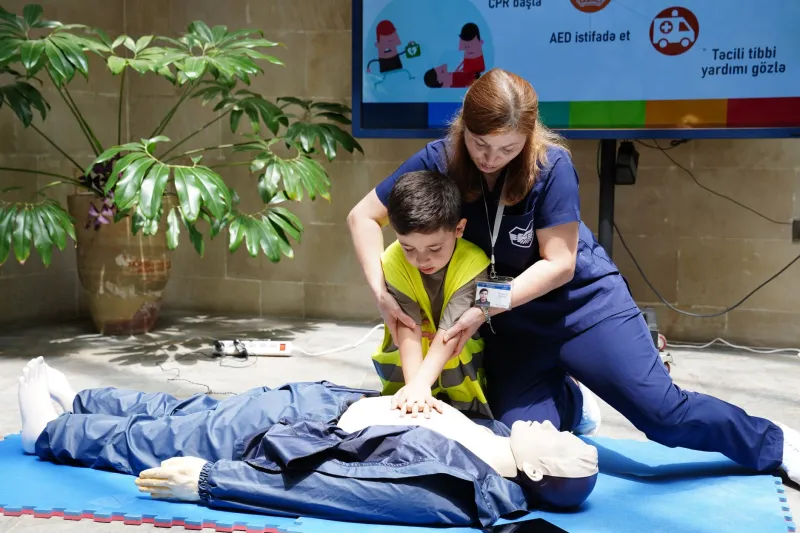
Reading about a technique and executing it under stress are two very different things. The most effective way to prepare is to take a hands-on first aid course that includes choking response practice with mannequins and real-time instructor feedback. The American Red Cross, American Heart Association, and many local hospitals and community organizations offer these courses throughout the country, often at low or no cost.
For families with young children or elderly members — populations at heightened choking risk — annual refresher training is a wise investment. Consider organizing a community training session through your neighborhood association, workplace, or place of worship. The more people in your immediate environment who are trained, the more likely someone will be positioned to act when it matters.
Your Role as an Everyday Hero
At Save Heroes, we believe that life-saving knowledge should not be confined to emergency rooms or ambulances. It belongs in every kitchen, every classroom, and every community gathering space across America. The evolution of choking rescue techniques is not a reason for confusion — it is a reason for renewed engagement with first aid education.
The techniques described here are accessible to virtually any adult who takes the time to learn them. A few hours of training and periodic review could one day place you in the right position, with the right knowledge, at exactly the right moment. That is what it means to be an everyday hero.