Airway Emergency: A Step-by-Step Guide to Recognizing and Responding When an Adult Is Choking

Every year, choking claims thousands of lives across the United States. According to the National Safety Council, it ranks among the top four causes of unintentional injury death, and the majority of incidents occur in everyday settings—at the dinner table, in a restaurant, or at a family gathering. Yet despite its prevalence, many people freeze in the critical moments when intervention could save a life.
At Save Heroes, we believe that preparedness is not reserved for medical professionals. With the right knowledge, any community member can step forward and act with confidence when an adult nearby begins to choke. This guide covers everything you need to know—from identifying the type of obstruction to performing the correct technique—so that when seconds count, you are ready.
Understanding the Two Types of Airway Obstruction
Not all choking emergencies look the same. Before you act, it is essential to distinguish between a partial airway obstruction and a complete airway obstruction, because the appropriate response differs significantly between the two.
Partial obstruction occurs when air can still move through the airway, even if breathing is labored. The person may be coughing forcefully, wheezing, or speaking in a strained voice. In this scenario, the body's natural defense mechanism—coughing—is still functioning. The single most important thing you can do is encourage the person to keep coughing. Do not slap them on the back repeatedly or attempt abdominal thrusts, as doing so may actually dislodge the object deeper into the airway or interrupt the coughing reflex.
Complete obstruction is a true life-threatening emergency. The individual cannot speak, cannot cough effectively, and cannot breathe. They may instinctively clutch their throat with both hands—a universal distress signal recognized across cultures. Their face may flush red initially, then turn pale or bluish (a condition called cyanosis) as oxygen levels drop. Silence, paradoxically, is one of the most alarming signs: a person who cannot make any sound at all is in immediate danger.
Time is not on your side. Brain damage from oxygen deprivation can begin within four to six minutes. Acting swiftly and correctly is paramount.
Confirming the Emergency Before You Act
Before initiating any physical intervention, take two seconds to confirm what you are dealing with. Ask the person directly: "Are you choking?" If they cannot answer verbally, nod, or otherwise communicate, treat the situation as a complete obstruction and proceed immediately.
Announce to those around you that you are trained and are going to help. This reduces bystander confusion and ensures someone calls 911 without delay. Even if you resolve the obstruction successfully, emergency medical services should evaluate the individual afterward—internal injuries from abdominal thrusts are possible, and some dislodged objects may have moved into the lower airway.
Performing Abdominal Thrusts: The Heimlich Maneuver
The abdominal thrust technique, widely known as the Heimlich maneuver, remains the standard intervention for a conscious adult experiencing complete airway obstruction. Here is how to perform it correctly:
- Position yourself behind the person. Stand with one foot slightly forward for stability. This stance allows you to generate enough force and maintain balance.
- Locate the correct hand placement. Make a fist with one hand and place the thumb side against the person's abdomen, just above the navel and well below the breastbone (sternum). Avoid placing your hands on the ribs or the lower tip of the sternum, known as the xiphoid process, as this can cause serious injury.
- Grasp your fist with your other hand. Wrap your free hand firmly around your fist.
- Deliver firm, inward-and-upward thrusts. Use a sharp, forceful motion—not a squeeze—to push inward and upward simultaneously. Each thrust should be a distinct, deliberate action.
- Repeat until the object is expelled or the person loses consciousness. Continue performing thrusts in sets, reassessing after each attempt.
If the person loses consciousness, lower them carefully to the ground, call 911 if not already done, and begin CPR. When delivering rescue breaths during CPR, look into the mouth before each breath—if you can see the object, carefully remove it with a finger sweep. Do not perform blind finger sweeps, as this may push the obstruction deeper.
Special Circumstances: Obese Adults and Pregnant Individuals
Standard abdominal thrusts are not appropriate for every adult. When the individual is in late pregnancy or has a body shape that makes abdominal access impractical, chest thrusts are the recommended alternative.
To perform chest thrusts, stand behind the person and place your fist against the center of the chest, on the lower half of the breastbone. Use the same inward-and-upward motion, directing the thrust toward the spine. Chest thrusts are slightly less efficient than abdominal thrusts in some studies but are considerably safer for these populations.
What If You Are Alone and Choking?
This scenario is more common than most people realize. If you are alone and experiencing a complete airway obstruction, you have two options:
- Self-administered abdominal thrusts: Make a fist, position it as described above, grasp it with your other hand, and deliver inward-and-upward thrusts against your own abdomen.
- Use a hard surface: Lean over the back of a sturdy chair, a countertop edge, or a railing and press your upper abdomen against it sharply. The external pressure can replicate the force of an abdominal thrust.
Call 911 immediately if you are able to do so before or during these attempts. Even if you clear the obstruction, emergency follow-up care is advisable.
Debunking Common Myths
Several persistent misconceptions surround choking response and can lead bystanders to take the wrong action:
- "Give them water to wash it down." Liquid will not dislodge a solid obstruction and may complicate the airway further. Do not attempt this.
- "Back blows are the first step." The American Red Cross does recommend alternating back blows with abdominal thrusts for choking in adults, while the American Heart Association focuses primarily on abdominal thrusts. Both approaches are considered acceptable. What matters most is that you act—do not waste time debating technique.
- "If they can make any sound, they are fine." A high-pitched wheeze or weak cough indicates the airway is critically narrowed. Monitor the situation closely and be prepared to escalate your response.
- "Only elderly people choke." Adults of all ages are at risk. Eating quickly, talking while eating, consuming alcohol, and wearing dentures all increase the likelihood of choking incidents.
Prevention: The First Line of Defense
While knowing how to respond is essential, reducing the risk of choking in the first place is equally important. Encourage the adults in your household and community to:
- Cut food into smaller pieces, particularly tough meats and dense vegetables.
- Avoid laughing or speaking with food in the mouth.
- Eat slowly and chew thoroughly.
- Limit alcohol consumption during meals, as it impairs the swallowing reflex.
- Be attentive when eating while distracted—at a desk, watching television, or using a mobile device.
Your Role as an Everyday Hero
The ability to respond to a choking emergency is one of the most tangible, immediately applicable skills a person can possess. You do not need a medical license or specialized equipment. You need knowledge, composure, and the willingness to act.
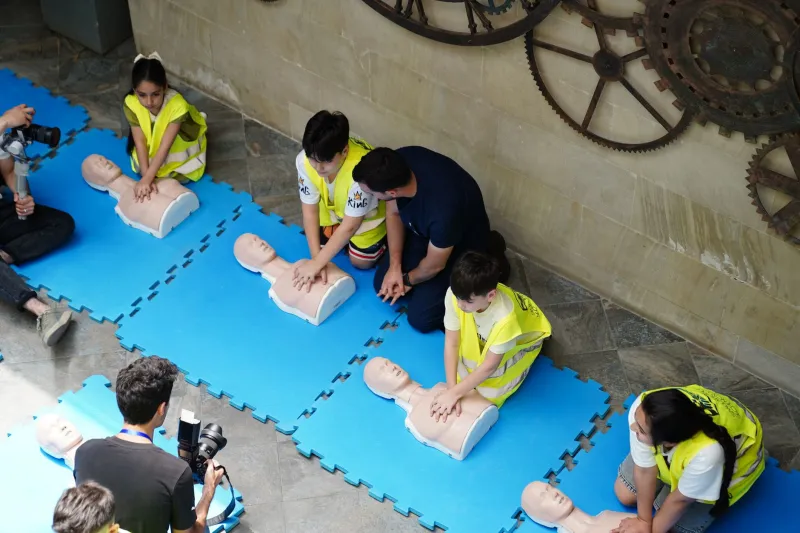
Consider enrolling in a hands-on first aid and CPR course offered through organizations such as the American Red Cross or the American Heart Association. Practical training reinforces the steps described here and builds the muscle memory that makes intervention instinctive under pressure.
At Save Heroes, we believe that communities become safer one prepared individual at a time. Share this guide with your family, your coworkers, and your neighbors. The next time someone at your table needs help, you will be ready.