Do You Know the Warning Signs? A Family Guide to Recognizing and Acting on a Stroke

Imagine sitting at Sunday dinner when your father suddenly stops mid-sentence. He seems confused, his smile looks uneven, and when he reaches for his glass, his arm drifts downward as if it has a will of its own. Would you know what you were witnessing? Many Americans would not — and that hesitation, even if it lasts only a few minutes, can permanently alter the course of a person's life.
Stroke is the fifth leading cause of death in the United States and a primary driver of long-term disability. Yet surveys consistently show that most people cannot identify its core warning signs. The good news: learning to recognize a stroke takes no medical background, no equipment, and no more than a few minutes of your time. What it does require is the willingness to act.
Why Speed Is Everything in a Stroke
A stroke occurs when blood flow to part of the brain is interrupted — either by a blockage (ischemic stroke) or by a burst blood vessel (hemorrhagic stroke). Brain cells begin dying within minutes of losing their oxygen supply. Neurologists often say that "time is brain," and that phrase is not hyperbole. Research shows that for every minute a large-vessel ischemic stroke goes untreated, approximately 1.9 million neurons are lost.
The most effective clot-dissolving medication available — tissue plasminogen activator, or tPA — must be administered within a narrow window of time from symptom onset, typically within three to four and a half hours. Mechanical interventions to remove a clot can sometimes be performed later, but outcomes decline sharply with every passing hour. The faster a stroke survivor reaches emergency care, the more of their brain — and their life — can be preserved.
This is precisely why recognition by a bystander, often a family member, is so critical. Emergency medical personnel cannot help someone they do not know needs them.
The FAST Method: A Framework Anyone Can Use
The FAST acronym was developed to give everyday people a reliable, memorable tool for identifying the most common stroke symptoms. It stands for:
F — Face Drooping Ask the person to smile. Does one side of their face droop or appear uneven? Facial asymmetry that appears suddenly, particularly when paired with other symptoms, is a strong warning sign. This is distinct from a person who simply has a crooked smile — the key word is sudden change.
A — Arm Weakness Ask the person to raise both arms in front of them and hold them level. Does one arm drift downward involuntarily, or does the person struggle to lift it at all? Unilateral weakness — weakness on one side of the body — is a hallmark of stroke. The person may not even be aware that one arm is behaving differently.
S — Speech Difficulty Ask the person to repeat a simple phrase, such as "The sky is blue on a sunny day." Is their speech slurred, garbled, or strangely difficult to follow? Alternatively, are they struggling to find words, speaking in fragmented sentences, or failing to understand what you are saying to them? Language disruption is among the most telling signs.
T — Time to Call 911 If you observe any one of these signs — not all three, just one — call 911 immediately. Do not drive the person to the hospital yourself unless emergency services are genuinely unavailable. Paramedics can begin assessment and alert the receiving hospital en route, which significantly shortens the time to treatment.
Beyond FAST: Other Symptoms Families Should Recognize
While FAST covers the most common presentations, strokes can also produce symptoms that fall outside this framework. Be alert to the following:
- A sudden, severe headache that the person describes as the worst of their life, with no apparent cause
- Abrupt loss of vision in one or both eyes, or double vision
- Sudden dizziness, loss of balance, or difficulty walking without explanation
- Numbness or tingling on one side of the body, including the face, arm, or leg
These symptoms, particularly when they arise without warning and cannot be attributed to another cause, warrant an immediate call to emergency services.
Real Situations Where Recognition Matters Most
Consider a few scenarios that reflect how strokes commonly present in family settings.
A grandmother in her late seventies mentions that she has been feeling "off" and has a strange headache. Her vision seems blurry, but she waves it off as tiredness. A family member who knows the warning signs will recognize that these symptoms, combined, demand urgent attention — not a nap.
A middle-aged father is watching a game when he suddenly cannot follow the commentary. He laughs it off, saying he must be more tired than he thought. His spouse notices his speech sounds thick and that he is having difficulty responding clearly. That spouse, armed with the FAST framework, calls 911 within minutes.
In both cases, the difference between a good outcome and a devastating one hinges entirely on whether someone nearby knew what to look for.
What to Do While You Wait for Help
Once you have called 911, there are several steps you can take to support the person until paramedics arrive.
- Keep the person calm and still. Have them sit or lie down in a safe, comfortable position.
- Do not offer food, water, or any medication. Swallowing difficulties are common during a stroke, and aspiration is a serious risk.
- Note the exact time when symptoms first appeared. This information is critical for the medical team determining treatment eligibility.
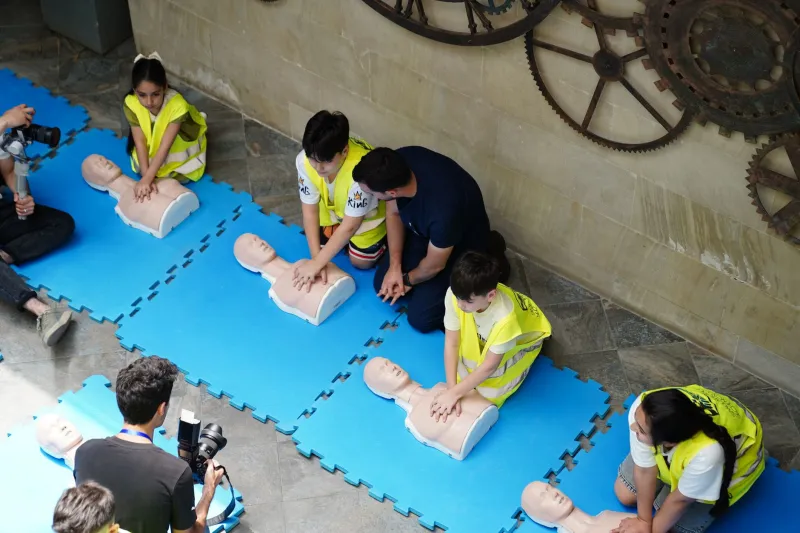
- If the person loses consciousness and stops breathing normally, be prepared to begin CPR if you are trained to do so.
- Unlock the front door so emergency responders can enter quickly.
- Gather any medications the person takes, if it is safe and quick to do so, and have them ready for the paramedics.
Recovery Is Possible — and Recognition Fuels It
Many stroke survivors make meaningful, even remarkable, recoveries — particularly when treatment is received promptly. Rehabilitation programs for speech, motor function, and cognition have advanced considerably, and the brain retains a degree of adaptability throughout life. However, the foundation of any positive outcome is speed of response in the first moments.
Organizations like the American Stroke Association and the Centers for Disease Control and Prevention offer community education resources, and many hospitals run free stroke awareness programs. Sharing what you know with neighbors, coworkers, and extended family members multiplies the number of people who might recognize a stroke and act decisively.
At Save Heroes, we believe that preparedness is not the exclusive domain of medical professionals. Understanding the FAST method, committing it to memory, and having the confidence to call for help when it matters — that is what it means to be an everyday hero. The person sitting across from you at your next family gathering may one day depend on exactly that.