Build a First Aid Kit That Actually Works: A Room-by-Room Guide for American Families
The Problem With the Kit on the Shelf
Walk into any CVS or Walmart, and you will find a wall of colorful first aid kits priced anywhere from $12 to $85. They look reassuring. They feel complete. But open one after a real emergency — a deep kitchen cut, a child's burn, a twisted ankle during a backyard game — and you may discover that the 280-piece kit you trusted contains mostly bandages in sizes no one actually uses, a pair of tweezers that bends under pressure, and an instruction booklet printed in font too small to read under stress.
According to the American Red Cross, the average American household experiences at least one first aid incident per year that requires more than a simple bandage. Yet a 2022 survey conducted by the National Safety Council found that fewer than half of U.S. households maintain a kit with the supplies recommended by emergency health professionals. The gap between what families own and what they genuinely need is not a matter of expense — it is a matter of information.
At Save Heroes, we believe that preparedness begins at home. The following guide is designed to help everyday Americans build a first aid kit that reflects the actual emergencies their households face, rather than the generic scenarios imagined by mass-market manufacturers.
Start With a Needs Assessment, Not a Shopping List
Before purchasing a single item, spend five minutes thinking honestly about your household. Ask yourself:
- Who lives here? Young children, elderly adults, and individuals with chronic conditions each introduce specific risks and supply requirements.
- What activities happen here? A household with avid hikers faces different hazards than one with a toddler or a home workshop.
- Do any family members take prescription medications? If so, your kit should account for the possibility that those medications are temporarily inaccessible during an emergency.
- Does anyone have known allergies, particularly to latex or adhesive materials?
This brief inventory transforms a shopping trip into a strategic exercise. It also prevents the common mistake of buying redundant items while ignoring critical gaps.
The Core Supplies: What Every American Household Needs
Regardless of household composition, emergency medicine professionals broadly agree on a foundational set of supplies. The following items form the backbone of any effective home kit.
Wound Care
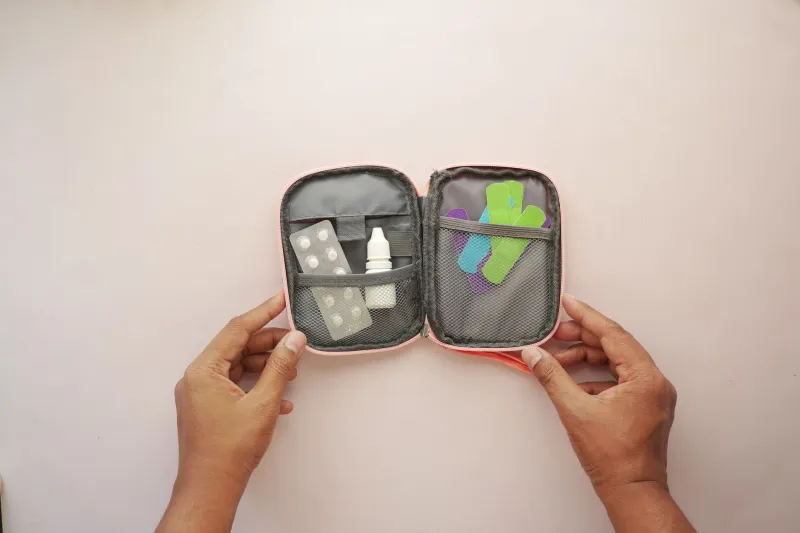
- Assorted adhesive bandages — prioritize a variety of sizes, including knuckle and fingertip shapes, which cover the most common injury sites
- Sterile gauze pads (2×2 and 4×4 inch) — for wounds too large or irregular for standard bandages
- Medical-grade adhesive tape — to secure gauze without relying on pre-attached adhesive
- Elastic bandage wrap (one 3-inch, one 4-inch roll) — for sprains, strains, and compression
- Wound closure strips — these thin adhesive strips hold the edges of deeper lacerations together until professional care is available
- Antiseptic wipes or solution — isopropyl alcohol pads or povidone-iodine for cleaning wounds
- Antibiotic ointment (triple antibiotic formulas such as Neosporin) — to reduce infection risk in minor cuts and abrasions
Tools and Instruments
- Nitrile gloves (at least two pairs, medium and large) — latex-free to accommodate allergies; these are non-negotiable for infection control
- Tweezers with a fine tip — for splinter and debris removal; invest in a metal pair, not plastic
- Scissors with blunt tips — for cutting tape, gauze, and clothing if necessary
- Digital thermometer — oral or temporal artery models are most practical for general household use
- CPR face shield or pocket mask — a compact, inexpensive tool that makes rescue breathing safer and more effective
- Instant cold packs (two) — for acute swelling, sprains, and heat-related injuries
Medications
- Over-the-counter pain reliever and fever reducer — both acetaminophen (Tylenol) and ibuprofen (Advil, Motrin), as they work through different mechanisms
- Diphenhydramine (Benadryl) — for mild allergic reactions and insect stings
- Antacid tablets — useful during stress-related gastrointestinal episodes common in emergencies
- Oral rehydration salts or electrolyte packets — particularly important in households with young children or elderly adults
Documentation
- Emergency contact card — list local poison control (1-800-222-1222), your family physician, and the nearest urgent care center
- A brief medical summary for each household member, noting blood types, allergies, and current medications
Additions Based on Household Composition
Households with young children should add: a bulb syringe, pediatric dosing chart for medications, infant-safe fever reducers, and a non-contact or ear thermometer for faster readings.
Households with elderly adults should include: a blood pressure cuff if hypertension is a concern, a pill organizer, a magnifying glass for reading medication labels, and extra non-slip socks to prevent fall-related injuries during recovery.
Households with active outdoor lifestyles benefit from: moleskin for blisters, a SAM splint for immobilizing limb injuries, water purification tablets, and a compact emergency whistle.
Storage: The Detail Most People Get Wrong
A first aid kit that cannot be located within 60 seconds during an emergency is functionally useless. Store your primary kit in a consistent, central location — most emergency preparedness experts recommend a kitchen cabinet or hallway closet on the main floor. Secondary kits belong in each vehicle and, if you have a multi-story home, on each floor.
The container itself matters. A hard-sided case with a secure latch prevents items from shifting, keeps moisture out, and holds its shape if dropped. Label the outside clearly with a red cross or bold text.
Set a calendar reminder to review your kit every six months. Check expiration dates on medications and ointments, replace any items that were used, and reassess whether your household's needs have changed.
The Real Cost of Preparedness
Assembling the core kit described above from generic or store-brand products typically costs between $30 and $45. That figure is often less than a single co-pay for an urgent care visit — and a well-stocked kit may prevent that visit entirely for minor injuries.
Pre-packaged kits are not inherently inferior, but they should be treated as a starting point rather than a finished product. Open any kit you purchase, remove items that do not apply to your household, and add the supplies that do.
Preparedness Is a Practice, Not a Purchase
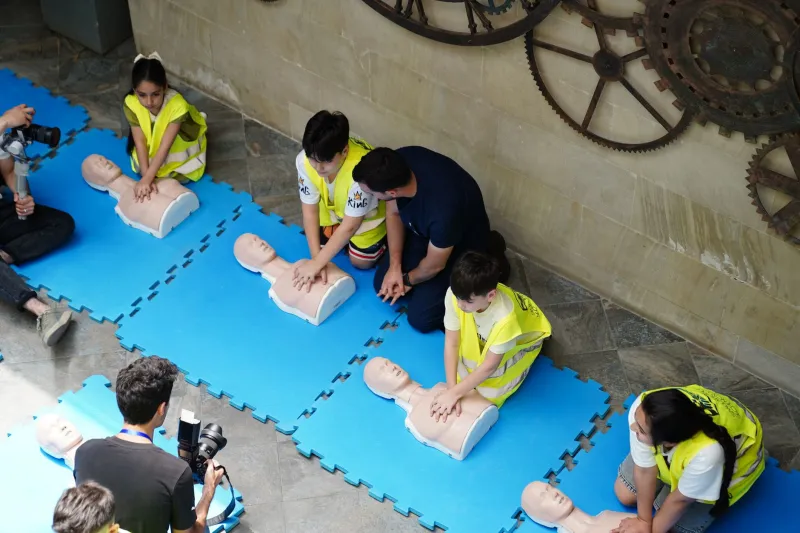
Owning a first aid kit is the first step. Knowing how to use its contents is the second — and equally essential — step. Save Heroes encourages every household member old enough to participate to take a basic first aid course through the American Red Cross, the American Heart Association, or a local community organization.
A well-stocked kit in the hands of someone who has practiced using it is among the most powerful forms of community protection available to ordinary Americans. You do not need a medical degree to stop bleeding, manage a burn, or stabilize a sprain. You need the right supplies, the right knowledge, and the confidence that comes from preparation.
That preparation begins today.