Why Good Intentions Go Wrong: The Psychology of Panic and Choking Intervention
Imagine you are seated at a family dinner table in suburban Ohio. The person across from you suddenly grabs their throat, their face shifting from pink to a deepening shade of red. They cannot speak. They cannot breathe. Every cell in your body screams at you to do something.
What happens next — in those first critical seconds — may be shaped less by what you have read or even been taught, and far more by something older and considerably less reliable: raw instinct under stress.
For many Americans, that instinct manifests as a frantic, open-palm slap to the upper back, a panicked shake of the victim's shoulders, or an attempt to reach fingers into the mouth and sweep out whatever is lodged there. None of these responses are recommended by the American Red Cross or the American Heart Association. Some can actively worsen the situation. And yet, trained and untrained bystanders alike perform them every day.
Understanding why this happens — and what can be done about it — is one of the most important and underappreciated dimensions of emergency preparedness.
The Brain Under Fire: How Stress Hijacks Decision-Making
The human stress response is an extraordinary survival mechanism, but it was not designed for modern medical emergencies. When you perceive an immediate threat, the amygdala — the brain's alarm center — triggers a cascade of hormonal responses that prioritize speed over precision. Cortisol and adrenaline flood the bloodstream. Heart rate spikes. Peripheral vision narrows. The prefrontal cortex, which governs deliberate reasoning and recall of learned procedures, is effectively downregulated.
In plain terms: the part of your brain that stores your first aid training becomes harder to access precisely when you need it most.
Researchers in the field of stress inoculation training have documented this phenomenon extensively among military personnel and first responders. The phenomenon is sometimes called "cortical inhibition under acute stress," and its practical consequence is that people revert to deeply ingrained, high-frequency behaviors — the things they have done thousands of times — rather than the carefully rehearsed techniques they studied in a weekend certification course.
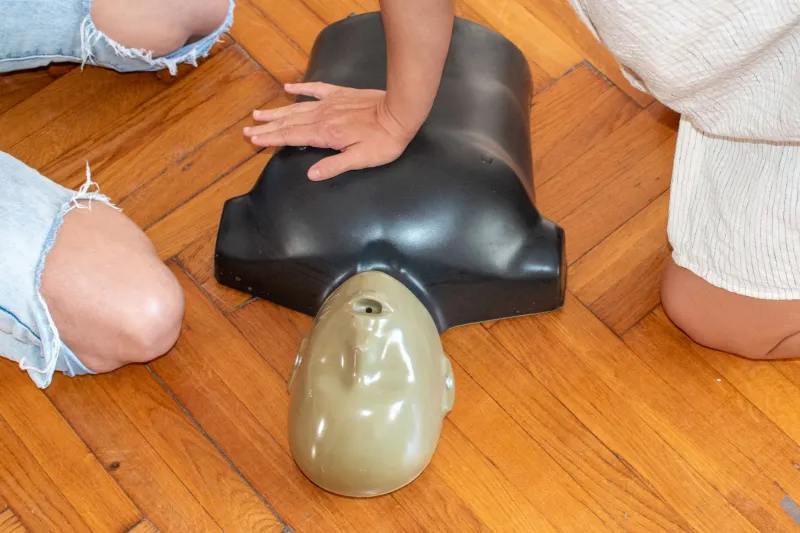
For most adults, slapping someone on the back has been a reflexive response to choking since childhood. It is what they watched adults do. It is what felt natural when they were young. That neural pathway is old and well-worn. The proper sequence of abdominal thrusts, by contrast, may have been practiced only a handful of times on a training mannequin. Under duress, the brain follows the path of least resistance.
The Danger of Doing Something — Anything
The impulse to act immediately is not inherently wrong. Hesitation during a choking emergency can be just as fatal as incorrect technique. The problem arises when urgency overrides accuracy.
Blind finger sweeps — inserting fingers into a choking victim's mouth to dislodge an obstruction — are among the most commonly observed incorrect responses. Current guidelines from major medical organizations explicitly advise against blind sweeps in conscious adults and children because the maneuver can push the object deeper into the airway. In infants, this risk is even more pronounced.
Similarly, vigorous, uncontrolled back blows applied without proper positioning can occasionally shift an object from a partial airway obstruction to a complete one. The distinction matters: a partial obstruction may allow some air exchange; a complete obstruction does not. This is not an argument against back blows as a technique — they are, in fact, recommended for infants and as part of an alternating sequence with abdominal thrusts for adults in some guidelines — but it underscores why technique and positioning are not incidental details. They are the difference between helping and harming.
The takeaway is uncomfortable but necessary: a bystander who is confident they are helping may, in certain scenarios, be making things worse.
Why Awareness Alone Is Not Enough
Many people who have been told the correct choking response — perhaps through a social media post, a workplace safety presentation, or a brief overview in a CPR course — still fail to execute it correctly under pressure. This is not a failure of intelligence or character. It reflects a well-documented principle in cognitive psychology: declarative knowledge (knowing that something is true) does not automatically translate into procedural competence (knowing how to do it fluidly under stress).
Reading that abdominal thrusts are the appropriate intervention for a conscious, choking adult is categorically different from being able to perform them correctly when your hands are shaking, a crowd is gathering, and someone's life visibly hangs in the balance.
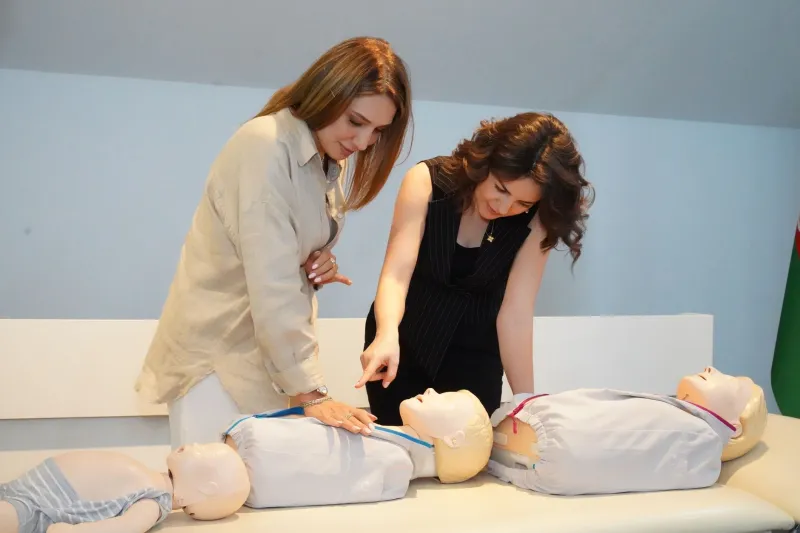
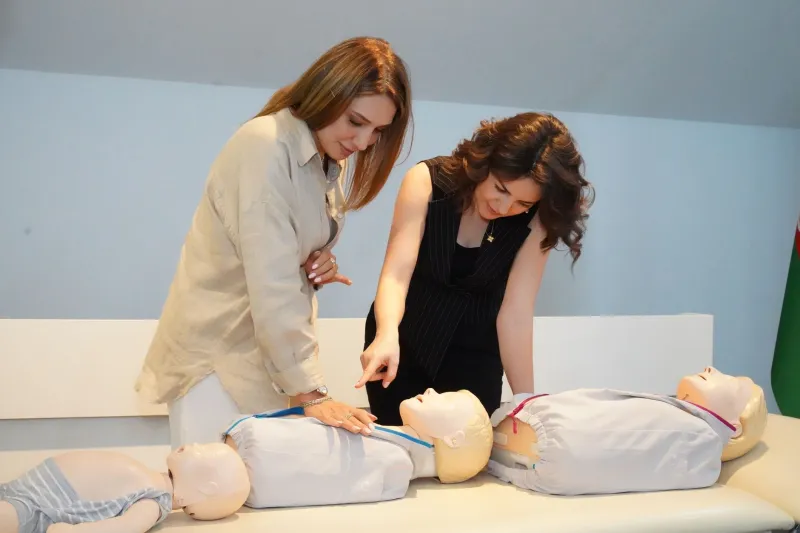
This is precisely why emergency preparedness organizations, including Save Heroes, consistently emphasize hands-on, scenario-based training over passive information consumption. The goal is not merely to inform — it is to build a motor memory so deeply embedded that it can compete with panic-driven instinct.
Mental Training Strategies That Actually Work
Fortunately, the same neuroscience that explains why panic undermines performance also points toward practical solutions.
Deliberate rehearsal under mild stress. Research on stress inoculation shows that practicing a skill in conditions that induce even modest physiological arousal — elevated heart rate, time pressure, an audience — significantly improves performance under real-world emergency conditions. If you have taken a first aid course, consider refreshing your skills in a group setting where social pressure adds a layer of stress to the exercise.
Mental rehearsal and visualization. Athletes and surgeons have long used mental rehearsal to strengthen procedural memory. Spending five minutes periodically visualizing yourself identifying a choking emergency, positioning yourself correctly behind the victim, and executing abdominal thrusts with proper technique reinforces the neural pathway associated with that sequence. It sounds deceptively simple. The evidence supporting it is not.
Verbal cueing. Developing a personal, practiced phrase — something like "Stand behind, hands above the navel, firm upward thrusts" — gives the prefrontal cortex a verbal anchor to grab during stress. When panic narrows your cognitive bandwidth, a memorized cue can pull the correct procedure back into working memory.
Annual recertification. The American Heart Association recommends CPR and first aid recertification every two years, but for skills you intend to be genuinely prepared to use, annual practice is more protective. Skills decay faster than most people expect, particularly those practiced infrequently.
Turning Instinct Into an Asset
The goal of mental training is not to eliminate instinct but to retrain it. With sufficient repetition and reinforced practice, the correct choking response can itself become instinctive — the well-worn neural pathway that the stressed brain defaults to, rather than the reflexive back-slap learned in childhood.
This is the deeper mission behind community-level emergency preparedness. It is not enough to know what to do. Everyday heroes must be able to do what they know, in real time, under real pressure, with real consequences.
That transformation — from awareness to competence, from information to action — does not happen by accident. It happens through training, rehearsal, and a clear-eyed understanding of how the human brain behaves when a life is suddenly in your hands.
If you have not yet pursued certified first aid training, or if your last course was more than a year ago, consider this your invitation. The next choking emergency in your community may not wait for a convenient moment. Your preparation should not, either.