What Your Certification Course Left Out: The Science Behind Chest Thrusts and Why They May Work Better Than You Were Taught
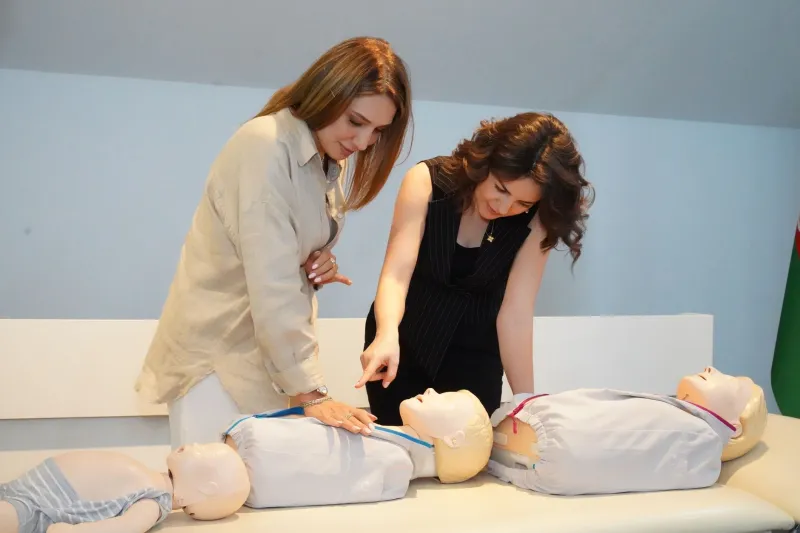
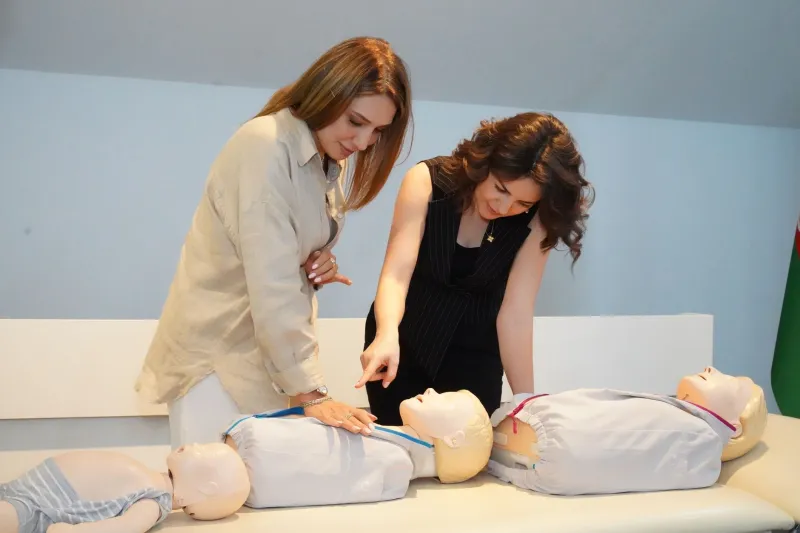
For decades, a single maneuver has dominated the American public's understanding of choking response. Ask almost anyone on the street what to do when someone is choking, and they will demonstrate some version of the technique developed by Dr. Henry Heimlich in the 1970s — a firm, upward thrust applied to the abdomen just below the ribcage. The image is everywhere: on restaurant walls, in school hallways, in the memory of every person who has ever sat through a workplace safety training.
But behind the scenes of emergency medicine, a quieter and more complicated conversation has been unfolding for years. Researchers, clinicians, and some of the country's most prominent first aid certification organizations have been reconsidering whether abdominal thrusts are truly the optimal first-line intervention — and whether the techniques many instructors continue to teach reflect the best available evidence.
Understanding this debate is not an academic exercise. It is a matter of practical, life-or-death preparation for the everyday heroes who may one day find themselves the only person standing between a neighbor, a child, or a stranger and a fatal airway obstruction.
How the Standard Became Standard
The technique widely known as the Heimlich maneuver gained rapid adoption in the United States following its introduction in the mid-1970s. Dr. Heimlich promoted the method aggressively, and early anecdotal reports suggested it was saving lives. By the 1980s, the American Red Cross and the American Heart Association had incorporated abdominal thrusts into their training curricula, and the maneuver became effectively synonymous with choking response in the public consciousness.
What is less commonly discussed is that the original evidence base for abdominal thrusts was relatively thin by modern standards. Much of the early support came from case reports and animal studies rather than controlled clinical trials — a limitation that researchers have noted repeatedly over the subsequent decades.
The Physiology of an Airway Obstruction
To understand why the science has shifted, it helps to understand what is actually happening during a choking emergency. When a foreign object lodges in the upper airway, the goal of any intervention is to generate sufficient intrathoracic pressure — pressure within the chest cavity — to force the object upward and out.
Abdominal thrusts accomplish this indirectly. By compressing the abdomen, the maneuver pushes the diaphragm upward, which in turn compresses the lungs and forces a burst of air toward the airway. The mechanism works, at least in theory, but it depends on a specific anatomical chain of events and requires precise hand placement to be effective.
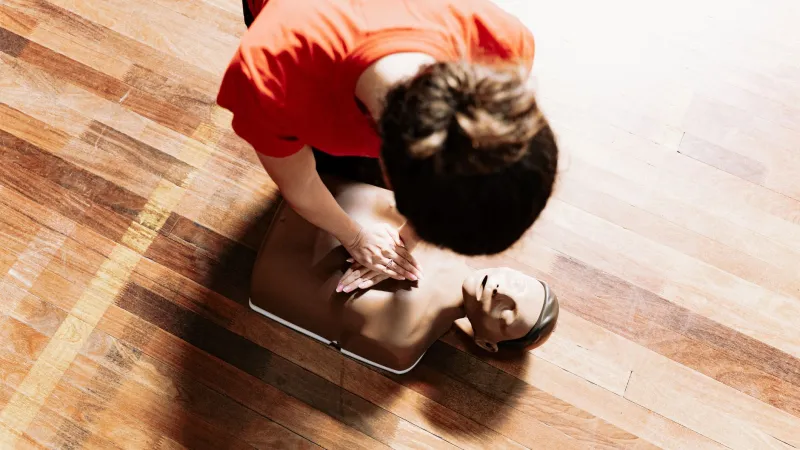
Chest thrusts and chest compressions operate differently. By applying force directly to the sternum and ribcage, these techniques compress the lungs more directly, potentially generating a stronger and more reliable pressure wave. Proponents argue that this more direct pathway offers a physiological advantage — particularly in situations where abdominal anatomy varies, such as in pregnant individuals, infants, or people with obesity.
"The chest is, in a sense, a more forgiving target," one emergency medicine educator noted in a continuing medical education seminar reviewed for this article. "The pressure you generate goes directly to the thoracic cavity. You are not relying on an intermediate step through the diaphragm."
What the Evidence Actually Shows
The honest answer about the comparative evidence is that it remains incomplete — and that incompleteness itself tells an important story.
Randomized controlled trials on conscious choking victims are extraordinarily difficult to conduct for obvious ethical reasons. Most of the available data comes from manikin studies, cadaveric research, and retrospective case analyses. Within that body of literature, several findings stand out.
Studies using instrumented manikins have found that chest thrusts can generate peak airway pressures comparable to — and in some configurations, greater than — abdominal thrusts. A frequently cited analysis published in Resuscitation found that chest compressions delivered in the standard CPR position produced airway pressures sufficient to dislodge simulated obstructions. Other researchers have noted that back blows, which are now formally recommended by organizations including the American Red Cross in combination with abdominal thrusts, appear to be effective as a first-line measure in their own right.
Critically, the American Heart Association updated its guidelines to acknowledge that both back blows and chest thrusts are reasonable alternatives, particularly for rescuers who cannot effectively perform abdominal thrusts. The International Liaison Committee on Resuscitation (ILCOR), which coordinates evidence reviews across multiple countries, has similarly moved toward a more flexible, evidence-informed framework rather than a single prescribed sequence.
Why Instructors Still Teach the Old Method
If the evidence is shifting, why do so many first aid courses continue to place abdominal thrusts at the center of their choking response curriculum?
The answer involves a combination of institutional inertia, curriculum update cycles, and the genuine complexity of communicating nuanced medical guidance to a general audience.
Certification organizations update their curricula on multi-year cycles, and changes to widely recognized techniques require extensive instructor retraining, updated materials, and careful public communication. Teaching a single, memorable technique to millions of Americans has clear advantages from a public health standpoint — even if that technique is not always optimal. There is also concern among some educators that introducing multiple options could create confusion in high-stress situations, where a rescuer's ability to act decisively may matter as much as the specific technique employed.
None of these considerations make the continued emphasis on abdominal thrusts wrong, exactly. But they do mean that many Americans are completing first aid courses without a full understanding of the alternatives available to them.
Practical Implications for Everyday Rescuers
For the community members and everyday heroes who are the foundation of emergency preparedness in this country, the takeaway is not that everything they were taught is incorrect. Abdominal thrusts, when performed correctly, can and do dislodge airway obstructions. The goal here is to expand the toolkit — not to discard it.
Several evidence-informed principles are worth incorporating into your personal preparedness knowledge:
Back blows are not optional. Current American Red Cross guidance recommends alternating five back blows with five abdominal thrusts for a conscious adult who is choking. Back blows are not a last resort — they are a recognized first-line measure that many Americans have never been formally taught.
Chest thrusts are an appropriate substitute in specific circumstances. For pregnant individuals, for people whose abdominal anatomy makes standard thrusts impractical, and for rescuers who cannot generate sufficient force with abdominal thrusts, chest thrusts applied to the lower sternum represent a valid and evidence-supported alternative.
If the victim becomes unconscious, the calculus changes entirely. An unconscious choking victim should be lowered to the ground and standard CPR compressions should begin immediately. Research suggests that standard chest compressions can generate enough airway pressure to dislodge an obstruction — and of course, CPR addresses the cardiac consequences of prolonged oxygen deprivation as well.
Seek updated training. If your first aid certification is more than two years old, or if your training did not cover back blows and chest thrust alternatives, it is worth seeking a refresher course from a provider whose curriculum reflects current ILCOR and AHA guidance.
A Call for Greater Transparency in First Aid Education
The broader lesson of the abdominal thrust debate is not that any single technique is wrong. It is that first aid education in the United States has sometimes prioritized simplicity and consistency over scientific currency — and that everyday rescuers deserve to know when the evidence is more complicated than their certification card suggests.
Organizations committed to genuine community preparedness have a responsibility to communicate these nuances clearly, even when doing so is uncomfortable. The person who acts in a choking emergency is not a liability to be managed. They are a hero in the making, and they deserve the most accurate, up-to-date information available.
At Save Heroes, our commitment is to that standard of honesty. The science of emergency response evolves. So should the knowledge of every American prepared to act.