Bleeding Control Basics Every American Should Know: How to Stop Severe Hemorrhage Before Help Arrives
In the span of three to five minutes, a person can lose enough blood from a major wound to slip into irreversible shock. That window — brief, unforgiving, and often unfolding far from a hospital — is precisely where an informed bystander becomes the most critical variable in a victim's survival. Emergency medical services are remarkable, but they cannot be everywhere at once. The everyday hero who acts first, acts correctly, and acts calmly is frequently the reason a patient lives to see the paramedics arrive.
Understanding how to manage severe bleeding is not reserved for military personnel or trauma surgeons. It is a practical, learnable skill that belongs in the preparedness toolkit of every American adult.
Understanding the Stakes: Why Hemorrhage Demands Immediate Action
The human body contains approximately ten pints of blood. Losing as little as two pints can trigger hemorrhagic shock — a cascade of physiological failure in which vital organs are deprived of oxygen. The brain, heart, and kidneys suffer damage within minutes under these conditions. What makes traumatic hemorrhage particularly dangerous is its speed. A severed femoral artery in the thigh, for instance, can cause fatal blood loss in under two minutes.
Common scenarios where life-threatening bleeding occurs include motor vehicle collisions, workplace accidents involving power tools or heavy machinery, falls from significant heights, and, increasingly, mass casualty incidents. In all of these situations, the gap between the moment of injury and the arrival of trained emergency responders represents a critical intervention window that bystanders can and should fill.
Recognizing Life-Threatening Hemorrhage
Not every cut or wound constitutes a bleeding emergency. Knowing which injuries demand immediate aggressive action is the first step.
Signs that bleeding may be life-threatening include:
- Blood that pulses or spurts in rhythm with the heartbeat, indicating arterial involvement
- Rapid soaking through clothing, bandages, or multiple layers of material
- Pooling blood accumulating visibly on the ground beneath the victim
- Wounds to the neck, groin, or inner thigh, areas where major blood vessels run close to the surface
- Partial or complete amputation of a limb
- A victim who is rapidly becoming pale, confused, or unresponsive, suggesting shock is already developing
If you observe any of these indicators, do not wait. Call 911 immediately — or direct a nearby bystander to do so — and begin bleeding control measures without delay.
The Foundation of Hemorrhage Control: Direct Pressure
For the majority of serious wounds, sustained direct pressure remains the most immediately effective intervention available to a bystander. The goal is straightforward: compress the damaged blood vessels long enough for the body's clotting mechanisms to begin their work.
How to apply direct pressure correctly:
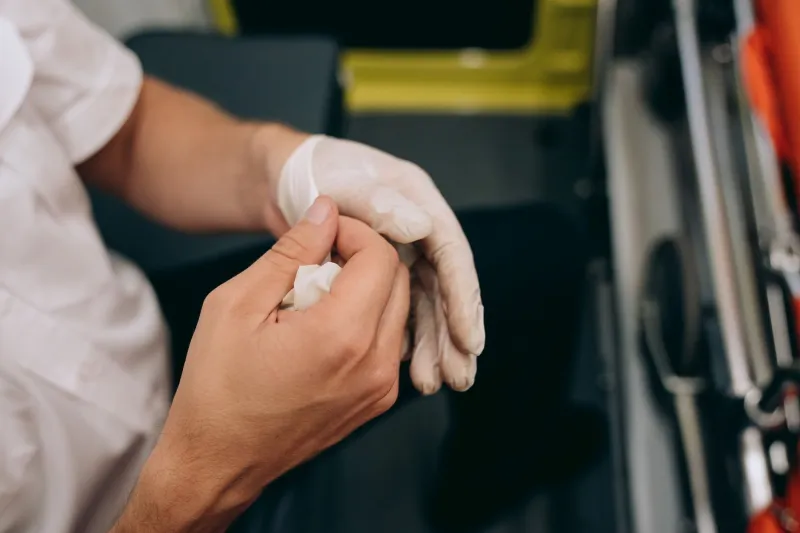
- If available, put on disposable gloves to protect both yourself and the victim from bloodborne pathogens. If gloves are unavailable, use multiple layers of cloth or have the victim apply their own pressure if they are conscious and capable.
- Place a clean cloth, gauze pad, or any available absorbent material directly over the wound.
- Press down firmly with both hands, using your body weight if necessary. Pressure must be continuous and hard — hesitation or gentle pressing will not achieve hemostasis.
- Do not lift the material to check the wound. If blood soaks through, add more material on top and press harder. Removing the original layer disrupts any clotting that has begun.
- Maintain pressure for a minimum of ten minutes without interruption. Set a mental timer and commit to it.
This technique is effective for wounds to the torso, back, shoulders, and areas where a tourniquet cannot be applied.
When to Use a Tourniquet — and How
For severe bleeding involving the arms or legs, a tourniquet can be the single most life-saving tool available. Despite decades of misconception suggesting that tourniquets cause permanent damage or limb loss, modern medical evidence — much of it drawn from military combat experience — confirms that properly applied tourniquets save lives with minimal risk of serious complications when used appropriately.
A tourniquet is indicated when:
- Bleeding from a limb is severe and direct pressure is not controlling it
- The wound is on an extremity and the hemorrhage is rapid
- You are alone and cannot maintain continuous pressure while also managing the scene
- The victim has a partial or complete amputation
Applying a commercial tourniquet (such as a CAT or SOFTT-W):
- Place the tourniquet two to three inches above the wound, never directly over a joint.
- Thread the strap and pull it as tight as possible before securing it.
- Twist the windlass rod until bleeding stops — this will require significant force and the victim will experience considerable pain. Do not stop twisting prematurely.
- Lock the windlass in place and secure it with the retention strap.
- Note the time of application on the tourniquet itself or on the victim's skin using a marker. This information is critical for the receiving medical team.
Improvised tourniquets using belts, zip ties, or torn fabric are a last resort. They are less reliable than commercial devices, but in the absence of proper equipment, a properly improvised tourniquet is far better than no tourniquet at all. The material must be at least two inches wide and applied with enough tension to stop blood flow entirely.
Wound Packing: Addressing Deep or Irregular Injuries
Certain wounds — particularly deep puncture injuries, gunshot wounds, or lacerations in the groin or armpit where a tourniquet cannot reach — require wound packing to achieve hemorrhage control. This technique involves filling the wound cavity with gauze and applying sustained internal pressure.
If hemostatic gauze (such as QuikClot or Combat Gauze) is available, it is the preferred material, as it contains agents that accelerate clotting. Standard gauze is also effective.
To pack a wound:
- Using gloved fingers, push the gauze firmly into the deepest part of the wound.
- Continue packing additional gauze on top, pressing it down firmly with each addition.
- Once the wound is packed, apply direct pressure over the packed area with both hands for a minimum of three minutes, or longer if hemostatic gauze is not being used.
This technique requires a degree of composure, as it can appear counterintuitive. However, wound packing is a well-established and teachable skill that has saved countless lives.
Recognizing and Responding to Shock
While bleeding control is the priority, monitoring the victim for signs of hemorrhagic shock is equally important. Shock occurs when the circulatory system can no longer deliver adequate oxygen to the body's tissues.
Warning signs include:
- Pale, cool, or clammy skin
- Rapid, shallow breathing
- Weak or rapid pulse
- Confusion, anxiety, or unusual restlessness
- Nausea or loss of consciousness
If the victim shows signs of shock, lay them flat and elevate their legs approximately twelve inches, provided no spinal or leg injury is suspected. Keep them warm using a blanket or jacket. Do not give food or water. Continue bleeding control measures and provide calm, reassuring communication until emergency responders arrive.
The Case for Community Preparedness Training
The Stop the Bleed campaign, a national initiative launched in partnership with the American College of Surgeons and supported by federal agencies, has trained millions of Americans in basic hemorrhage control techniques. Classes are widely available through hospitals, community organizations, fire departments, and online platforms. The training typically requires less than two hours and equips participants with the hands-on confidence to act under pressure.
Every American — regardless of profession, age, or prior medical experience — is a potential first responder. Stocking a home, vehicle, or workplace with a basic bleeding control kit containing gloves, gauze, a commercial tourniquet, and medical tape is a modest investment with potentially profound consequences.
The paramedics are on their way. What you do in the minutes before they arrive may be the most important thing you ever do.